Introduction
Payroll runs every Friday. Suppliers want payment in 30 days. Your customers pay in 45 or more.
That gap is where many US small and mid-sized businesses get squeezed. In Atradius' 2025 survey, Atradius US research found 43% of B2B credit sales were overdue, with average terms of 45 days from invoicing.
This guide explains B2B financing and loans, compares the main options, covers eligibility and repayment, and shows how to match funding to your operating cycle instead of choosing on approval speed alone.
Key Takeaways
- B2B financing covers loans, credit lines, invoice funding, trade credit, and revenue-based advances.
- Match the product to the purpose of funds and the timing of customer payments.
- Lenders weigh revenue, cash flow, invoices, and collateral, not just personal credit.
- Compare total repayment, fees, payment frequency, and guarantees before signing.
What Is B2B Financing and How Is It Different From a B2B Loan?
B2B financing is funding or credit that a business uses to operate, buy goods and services, manage receivables, expand, or give another business payment flexibility.
A loan is one type. It provides borrowed money repaid under agreed terms. Financing is wider and also includes:
- Revolving credit lines
- Invoice factoring
- Trade credit from suppliers
- Revenue-based advances
- Business buy now, pay later (BNPL)
Why timing gaps create a financing need
A typical cycle runs from purchase order or service delivery, to invoice, payment terms, collection, and settlement. APQC calls this the order-to-cash process.
Costs arrive at the start. Cash arrives at the end. A contractor buys materials and pays crews this week but collects a draw in 60 days. That mismatch, not poor management, is usually what drives a funding need.

Types of B2B Financing and Business Loans
Term loans and SBA-backed loans
A term loan delivers a lump sum, repaid on a schedule. It suits expansion, refinancing, or a large one-time expense. Lenders typically review credit, financial statements, and collateral.
SBA 7(a) loans go up to $5 million, with maturities generally up to 25 years. SBA rules generally require personal guarantees from owners with 20% or more ownership.
Lines of credit
A revolving line lets you draw, repay, and borrow again. It fits seasonal swings, recurring payroll gaps, and unpredictable short-term costs. You pay on what you use, though availability can depend on ongoing collateral measurements.
Invoice financing and factoring
Borrowing against invoices keeps the receivable yours. Factoring sells it. The OCC describes factoring as purchasing receivables at a discount, usually without recourse. Ask these questions:
- Who collects from your customer?
- What percentage is advanced upfront, and what fees apply?
- Is the arrangement recourse or non-recourse?
Equipment financing and secured vs. unsecured
Equipment financing fits vehicles, machinery, and technology, with the asset serving as collateral. Unsecured financing leans on revenue, cash flow, credit, or a personal guarantee. Rates are often higher without collateral.
Revenue-based advances, trade credit, and B2B BNPL
- Revenue-based advances: repaid from future sales, often daily or weekly.
- Trade credit: a supplier lets you pay later, such as net 30.
- B2B BNPL: pay vendors in installments while the vendor is paid in full.
All three can boost short-term purchasing power. They differ from conventional loans in cost structure, payment triggers, and cash-flow impact.
How B2B Financing Works: From Need to Repayment
Start with the need
Pin down the exact expense, the amount, when the gap hits, and where repayment will come from. Is it one-time, seasonal, recurring, or growth-related? A clear answer narrows the product list fast.
What lenders review
Lenders may look at business and personal credit, bank statements, receivables aging, customer concentration, time in business, industry, existing debt, tax records, and collateral. Many frame this through the FDIC's five Cs:
- Character: your track record
- Capacity: cash flow available to repay
- Capital: business resources
- Collateral: pledged assets
- Conditions: industry, market, and loan purpose
Prepare your application
Gather these before you apply:
- Recent financial statements and tax returns
- Several months of bank statements
- Outstanding invoices
- Ownership and formation documents
- A short, specific use-of-funds explanation
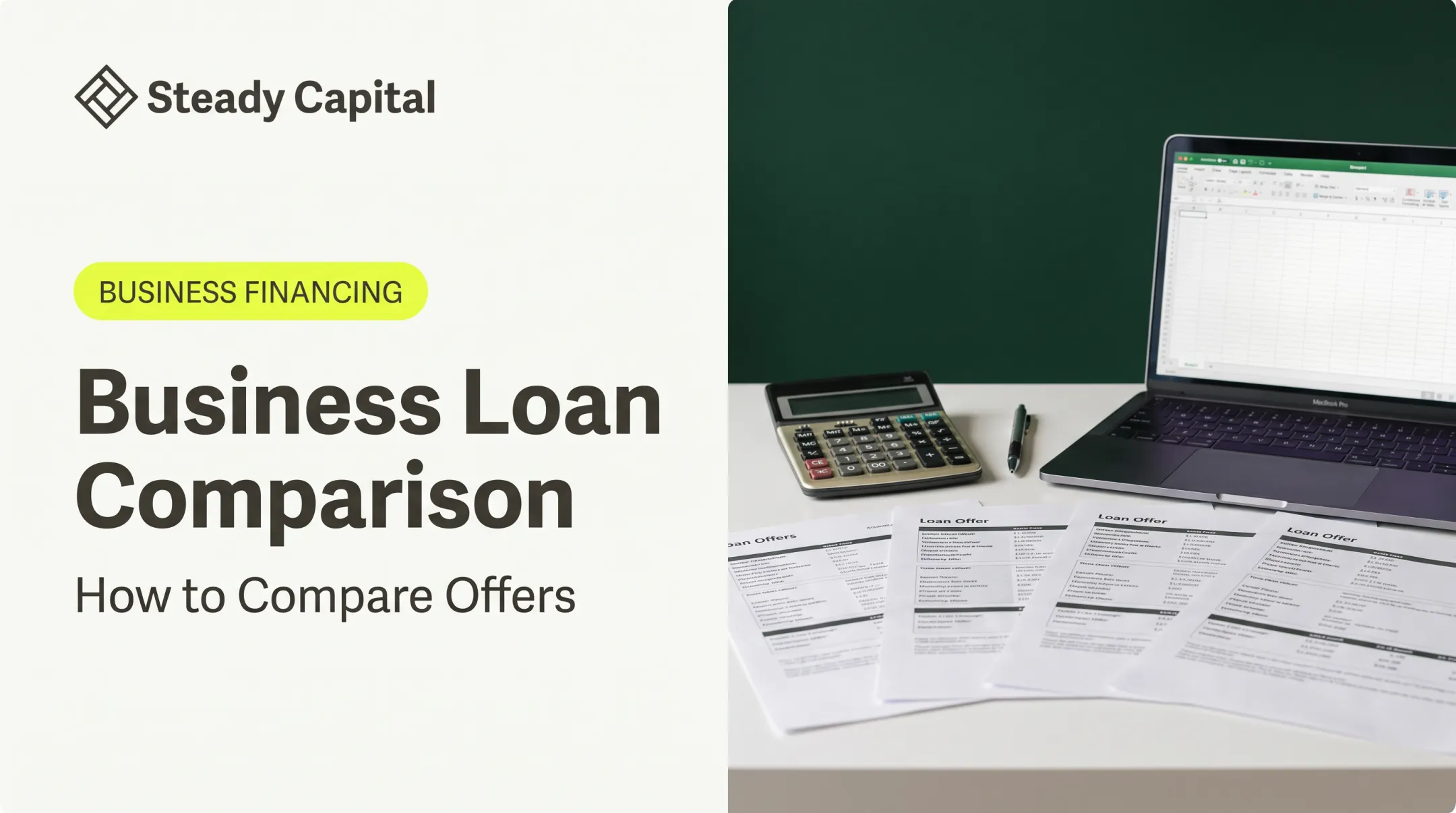
Compare offers
Line up each offer on the same terms:
- Total repayment
- Factor or interest rate
- Origination and servicing fees
- Payment frequency and term
- Prepayment rules and late charges
- Collateral, personal guarantees, and UCC filings
Disclosure rules vary by state. California and New York require annualized-rate disclosures in covered cases, while other states require dollar-cost disclosures instead.
Funding and repayment
After approval conditions are met, funds are disbursed. Repayment then runs through automatic withdrawals or scheduled payments. Ask what happens if sales or receivables come in lower than expected, before you sign.

Choosing the Right Financing for Your Business
Match product to cash-flow event
| Cash-flow event | Typical fit |
|---|---|
| Defined long-term project | Term loan |
| Repeated shortfalls | Revolving line of credit |
| Eligible unpaid invoices | Invoice financing or factoring |
| Specific asset purchase | Equipment financing |
| Operating costs repaid from ongoing revenue | Working-capital funding |
Common US scenarios
- Contractors waiting on project draws: invoice-based funding or a credit line
- Restaurants covering payroll or equipment: a line of credit or equipment financing
- Retailers and ecommerce sellers buying inventory: revolving credit
- Medical practices awaiting reimbursements: a line of credit sized to the delay
- Staffing and service firms funding payroll: receivables-based funding
- IT and tech firms bridging billing cycles: a line of credit or short-term working capital
Comparing lender types
The Federal Reserve's Small Business Credit Survey shows differences worth knowing. Small banks had the highest full-approval share at 57%. Satisfaction was 76% at credit unions and 35% at online lenders.

Banks often offer lower costs but heavier paperwork. Online lenders are faster, with mixed satisfaction. Specialized finance companies and marketplaces vary widely. Verify current terms with each provider.
Credit strength matters
Strong credit opens cheaper bank options. Limited or damaged credit may point to cash-flow-based underwriting. That does not erase repayment obligations. Avoid stacking several expensive products at once.
One example: Steady Capital Solutions
Steady Capital Solutions is a commercial financing marketplace that connects small and mid-sized businesses with independent third-party providers. Funding ranges from $30,000 to $5,000,000, with secured and unsecured structures. Listed options include working capital, revolving credit, unsecured lines of credit, and invoice factoring.
It works with owners with good or bad credit, requires at least three months in business and proof of cash flow, and charges no application fees. Approval, pricing, terms, and funding timing depend on provider underwriting and are not guaranteed.
Costs, Risks, and Responsible Borrowing
Calculate the full cost
An advertised rate rarely tells the whole story. Add up:
- Interest or factor charges
- Origination, draw, and servicing fees
- Renewal costs and prepayment terms
- Payment cadence: daily, weekly, or monthly
Fees can be deducted from the amount you receive, so compare net proceeds with total repayment. An FTC staff paper noted that fixed fees, factor rates, and APRs make products hard to compare.
Know the risks
- Personal guarantees, reported by 59% of employer firms with debt
- Collateral seizure on default
- Recourse obligations if customers don't pay
- Variable payments and reconciliation terms
- Late-payment penalties and restrictive covenants
- Short repayment periods that strain cash flow even when the amount looks manageable
New York's 2025 Yellowstone settlement shows the worst case: contracts described future-revenue purchases, yet fixed daily debits ran 60 or 90 days. That is one enforcement case, not the market norm.
Cash-flow stress-test checklist
- Model repayment during your slowest sales month.
- Confirm the source and timing of repayment funds.
- Keep a reserve for taxes and payroll.
- List all existing debt and payments.
- Get legal or financial advice before signing unfamiliar documents.
Frequently Asked Questions
What is B2B financing?
Funding or credit used between businesses, or by a business for operations. It is a broad category, while a business loan is one specific product within it.
How does B2B payment work?
A buyer places an order, the seller invoices, and payment is due under agreed terms such as net 30 or net 45. Slow settlement can leave the seller short of working capital.
What are types of business loans?
Common types include term loans, lines of credit, SBA-backed loans, equipment financing, and invoice financing. Eligibility and repayment terms vary by lender and applicant.
What is the easiest way to get business funding?
It depends on your revenue, credit, time in business, documents, and need. Prepare clean records and compare several lenders. No route guarantees approval.
Can a business lend money to another business?
Yes, through commercial credit, trade credit, or other structures. Use written agreements and review tax, licensing, securities, and lending rules first.
What are the five C's of business lending?
Character, capacity, capital, collateral, and conditions. Lenders may weigh them differently depending on the product and applicant.